Embroidery Falling Leaves Seamless Review
As an experienced embroidery designer who has spent years turning digital concepts into tactile reality, I know that the success of a small business often hinges on the smallest details. When I first encountered Embroidery Falling Leaves Seamless, my immediate thought was not just about aesthetics, but about its viability for commercial application. This pattern is more than just a visual element; it is a potential cornerstone for brand identity across uniforms, patches, and merchandise. In this review, I will break down how this design performs in real-world scenarios for boutique owners, apparel decorators, and creative studios.
First Impressions: A Rustic Yet Premium Feel
The title Embroidery Falling Leaves Seamless suggests a natural, organic flow that resonates deeply with brands focusing on sustainability, nature, or artisanal craftsmanship. The concept of a seamless pattern implies continuity, which is crucial for large-scale applications like aprons or tote bags where a repeating motif needs to look intentional rather than repetitive. From a design perspective, the falling leaves theme evokes a sense of seasonal change, warmth, and grounded elegance. It feels friendly and approachable yet retains a level of sophistication suitable for premium product labels. Whether you are running a local café, a florist shop, or a handmade jewelry brand, this design offers a versatile backdrop that can be styled to feel either rustic and cozy or modern and clean depending on your thread choices.
Real-World Application for Small Business Merch
The true test of any design asset lies in its execution on physical goods. For a small business owner looking to expand their inventory, Embroidery Falling Leaves Seamless presents exciting possibilities. Imagine a boutique bakery applying this pattern as a subtle accent on the chest of their staff aprons. The seamless nature allows the design to wrap around the garment without awkward breaks, creating a cohesive look that elevates the perceived value of the uniform. Similarly, for a pet brand or a craft studio, incorporating this pattern into embroidered patches could serve as a powerful branding tool.
Patches featuring this design are ideal for adorning denim jackets, caps, or canvas tote bags. The organic shapes of the leaves provide excellent opportunities for texture play in machine embroidery. When stitched onto sturdy fabrics like twill or denim, the design adds depth and character that printed logos often lack. Furthermore, for Etsy sellers and digital file buyers, these graphics are perfect for creating printable mockups. You can visualize how the pattern looks on a variety of products before committing to production, ensuring that the final output matches your vision. This versatility makes it a valuable addition to your collection of design assets for commercial embroidery projects.
Versatility Across Product Categories
- Staff Uniforms: Use the seamless aspect to create all-over patterns on work shirts or vests, reinforcing team identity.
- Caps and Hats: The flowing leaf motifs work well on curved surfaces, adding a unique flair to cap embroidery.
- Tote Bags: A large, centered application of the pattern on canvas totes creates a stylish, reusable shopping bag that customers love.
- Product Packaging: While primarily for fabric, the high resolution (300 dpi) allows for use on paper crafting elements that accompany custom apparel or handmade products.
Strategic Considerations and Limitations
While Embroidery Falling Leaves Seamless is highly adaptable, an experienced designer knows that every design has constraints. One must exercise caution when considering small patch sizes or intricate details on curved surfaces like the front of a fitted cap. If the original design contains very fine lines or tiny lettering, these elements may not translate well when digitized for a small area, potentially leading to thread breaks or a loss of definition. High stitch density is another factor to monitor; if the pattern is too dense, it can make the fabric stiff and uncomfortable, especially on items that require frequent washing.
Additionally, the choice of fabric texture plays a significant role. On dark uniforms, the contrast of the thread colors becomes paramount. If the background fabric is black or navy, the leaf pattern must be rendered in lighter, vibrant threads to ensure visibility. Conversely, on light-colored fabrics, darker outlines might be necessary to define the shapes. It is also critical to inspect the spacing of the seamless repeat. A poorly aligned repeat can look jarring on large items, so testing the layout before full production is essential. Always confirm the commercial licensing terms to ensure you have the right to use the design on items intended for resale.
Impact on Brand Identity and Customer Trust
In the competitive world of small business merch, visual consistency is key to building customer trust. Using a cohesive design like Embroidery Falling Leaves Seamless across various touchpoints—from a branded patch on a delivery driver's cap to a logo on a product label—creates a professional image. Customers associate high-quality embroidery with durability and care, which enhances the perceived value of the finished product. When a customer sees a well-executed embroidered design, they subconsciously recognize the attention to detail your brand puts into everything you do. This engagement fosters loyalty and encourages repeat purchases.
The handmade presentation offered by machine embroidery distinguishes your brand from mass-produced competitors. It signals authenticity and quality, which are highly valued by buyers of handmade products and artisanal goods. By integrating this pattern strategically, you are not just decorating an item; you are telling a story about your brand's connection to nature, seasonality, or craftsmanship.
Practical Designer Notes for Production
Before you move forward with using Embroidery Falling Leaves Seamless for your next project, here are some essential steps to ensure success:
- Test in Black and White: Convert the design to grayscale first to check if the contrast holds up without relying on color.
- Check Stitch Density: Review the file to ensure the density is appropriate for the fabric type you plan to use.
- Inspect Spacing: Verify that the seamless repeat aligns correctly to avoid visible seams on large garments.
- Confirm Hoop Size: Ensure your hoop size accommodates the scale of the design, especially for large all-over prints.
- Use Proper Stabilizer: Select a stabilizer that supports the weight of the embroidery to prevent puckering.
- Create a Mockup: Generate a printable mockup to show clients or stakeholders before cutting fabric.
- Review Thread Colors: Test different thread combinations to find the best contrast against your target fabric.
- Verify Licensing: Double-check the included terms to confirm you are allowed to use the design for commercial purposes.
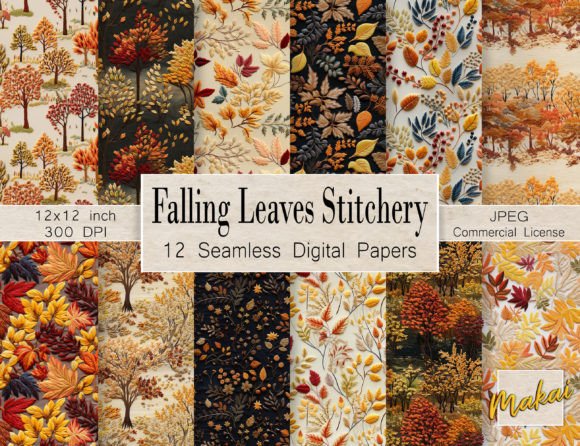
Remember that while the description mentions 12 seamless digital papers at 3600 x 3600 pixels, specific digitization details like exact stitch counts or file formats for direct embroidery machines should be verified with the source. If you are working with a digital embroidery file, ensure it is compatible with your machine software. If you are using the JPEGs for sublimation or printing, the 300 dpi resolution is excellent for high-quality output.
Ultimately, Embroidery Falling Leaves Seamless is a robust option for those looking to elevate their small business merch. With careful planning and attention to the technical aspects of embroidery, this design can become a signature element of your brand, helping you stand out in a crowded market.